
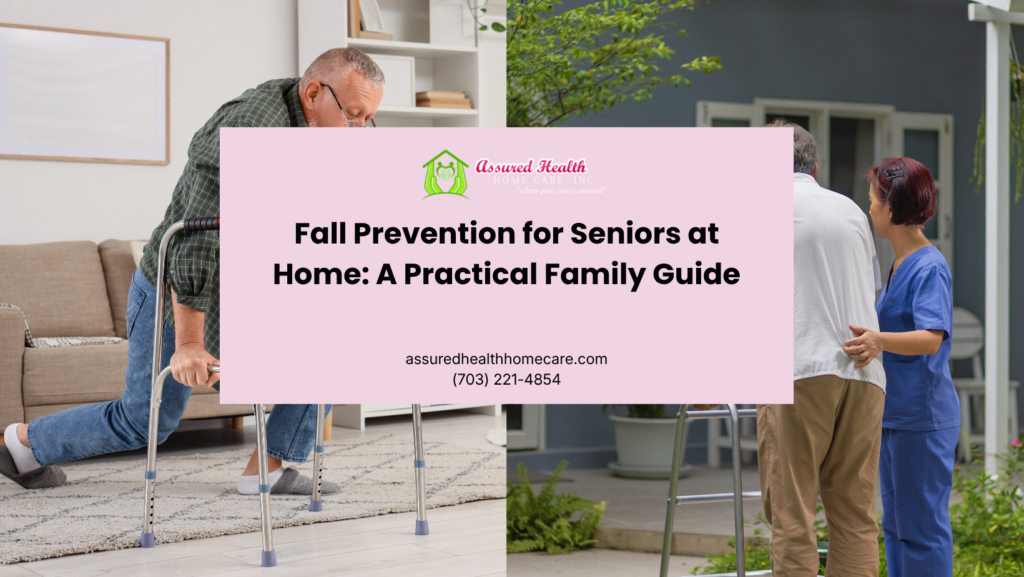
| Quick answer: Falls are a leading cause of injury among older adults, but most can be prevented with the right steps. Removing hazards, improving lighting, adding grab bars, and staying active all reduce risk significantly. A professional caregiver can also provide daily support that keeps your loved one safe and confident at home. |
If someone you love is aging in place, fall prevention for seniors at home is probably one of your biggest worries. We understand how stressful it is to wonder whether Mom or Dad is safe when you are not there. The good news is that most falls are not random accidents. They follow patterns, and those patterns can be interrupted.
This guide walks you through the most effective, practical steps your family can take right now. From rearranging furniture to knowing when professional support makes sense, you will find concrete actions at every stage. Our team at Assured Health Home Care, Inc serves families throughout Woodbridge, VA and surrounding communities, and we see every day how small changes add up to real safety.
Why Fall Prevention for Seniors at Home Matters
Falls are the most common cause of serious injury in adults over 65. A single fall can lead to a hip fracture, a hospital stay, or a loss of confidence that causes a senior to move less, which raises the risk of future falls. The cycle can be hard to break once it starts.
The encouraging truth is that most home falls happen in predictable places and predictable situations. Wet bathroom floors, loose rugs, poor lighting, and reaching for items on high shelves account for a large share of incidents. Knowing where risk lives lets you act before an accident happens rather than after.
- Bathrooms are the highest-risk room in most homes.
- About half of all falls happen during routine daily activities, not unusual ones.
- Fear of falling can itself increase fall risk by causing hesitation and unsteady movement.
- Medication side effects, including dizziness, raise risk and are often overlooked.
- A prior fall is the strongest predictor of a future fall.
Room-by-Room Safety Checks Your Family Can Do Today
Start in the bathroom. Install grab bars beside the toilet and inside the shower or tub. Use a non-slip mat on the floor outside the shower and a rubber mat or adhesive strips inside it. A shower chair or bench lets your loved one bathe seated, removing the need to balance on one leg.
Move through every other room with fresh eyes. Secure or remove loose rugs, especially in hallways and near the bed. Clear walking paths so furniture is not an obstacle. Make sure cords are tucked away. In the bedroom, a bed rail and a lamp or nightlight within easy reach can prevent the dangerous scramble in the dark that causes so many nighttime falls.
- Add stair handrails on both sides if stairs are used regularly.
- Store frequently used items at counter height so reaching up or bending down is rarely needed.
- Replace round doorknobs with lever handles for easier grip.
- Check that outdoor steps and walkways are clear of leaves, ice, or uneven surfaces.
- Ensure every room has a light switch reachable from the doorway.
Exercise and Physical Strength as Fall Prevention
Strong legs, good balance, and flexible joints are among the best protections against falls. Simple exercises done consistently make a real difference. Chair exercises, gentle walking, and balance drills can all be done at home without special equipment. A physician or physical therapist can recommend a safe routine tailored to your loved one’s current condition.
Tai chi has strong evidence behind it as a fall prevention practice for older adults. It improves balance, coordination, and body awareness. Local community centers and senior programs in the Woodbridge, VA area often offer low-cost classes. Consistent movement, even gentle movement, is far better than avoiding activity out of fear.
- Heel-to-toe walking in a straight line improves balance with daily practice.
- Seated leg lifts and calf raises build lower-body strength without strain.
- Standing on one foot near a counter builds stability quickly.
- Stretching hip flexors and ankles improves gait and reduces stiffness.
- Ask a doctor before starting any new exercise program.
Medications, Vision, and Other Health Factors
Many falls are triggered by health factors that families do not immediately connect to fall risk. Certain medications, including sleep aids, blood pressure drugs, and some antidepressants, can cause dizziness or drop blood pressure when standing. Ask the doctor or pharmacist to review all current medications with fall risk in mind. This is general information, not medical advice; always confirm decisions with a qualified healthcare provider.
Vision changes also play a significant role. Outdated glasses prescriptions or conditions like cataracts can make it hard to judge distances and spot hazards. Regular eye exams help. Footwear matters too. Shoes with firm, non-slip soles and proper fit are safer than slippers or bare feet on smooth floors.
When a Professional Caregiver Supports Fall Prevention at Home
Sometimes the most important fall prevention tool is another person present during high-risk moments. Getting in and out of the shower, climbing stairs, or rising from a low chair are times when a caregiver’s steady hand makes a real difference. Our Personal Care Services include hands-on assistance with exactly these daily tasks, reducing the moments when a senior is most vulnerable.
A caregiver also provides consistent monitoring. They notice changes in gait, energy, or behavior that a family member visiting on weekends might miss. If you are wondering whether your loved one needs more regular support, you can reach Assured Health Home Care, Inc at (410) 202-4001. We are glad to talk through your situation and explain the options available for families in Woodbridge, VA and nearby areas. You can also learn more on our Companion Care Services page, where regular check-ins and daily engagement go hand in hand with safety.
Frequently Asked Questions
What is the most dangerous room in the house for senior falls?
The bathroom is consistently the highest-risk room due to wet surfaces, hard floors, and the physical demands of bathing. Grab bars, non-slip mats, and a shower seat are the most impactful changes you can make there.
Can exercise really reduce the chance of falling?
Yes. Exercises that improve balance, leg strength, and flexibility have clear evidence behind them. Even gentle, consistent activity done a few times a week lowers fall risk noticeably over time.
How do medications increase fall risk in older adults?
Some medications cause dizziness, lightheadedness, or a sudden drop in blood pressure when standing up. Ask a doctor or pharmacist to review all current prescriptions with fall risk as a specific concern. This is general information, not medical advice.
What role does a home caregiver play in fall prevention?
A caregiver provides physical assistance during high-risk moments like bathing, transfers, and stair use. They also observe daily changes in a senior’s movement and energy that can signal growing risk before a fall occurs.
How do I know if my parent needs professional in-home support for safety?
Signs include a recent fall, difficulty with bathing or dressing, changes in walking steadiness, or growing anxiety about moving around the home. Contacting a trusted home care agency is a good first step toward understanding your options.